Table of Contents
Chart Basics: What You're Looking At
The Three Main Chart Types
1. Line Chart
What it shows: Simple line connecting closing prices
Pros: Clean, easy to read, good for beginners
Cons: Lacks detail (no high/low/open data)
Best for: Quick overview of price direction
2. Candlestick Chart
What it shows: Open, high, low, close prices for each period
Pros: Most information, shows market sentiment
Cons: Can be overwhelming for beginners
Best for: Serious trading and analysis
3. Bar Chart
What it shows: Same as candlesticks but different visual
Pros: Detailed like candlesticks
Cons: Less visually intuitive
Best for: Traders who prefer bars over candles
Understanding the Axes
- X-Axis (Horizontal): Time - shows when prices occurred
- Y-Axis (Vertical): Price - shows how much the asset costs
Where to View Charts
- TradingView: Best free charting platform (tradingview.com)
- Exchange Charts: Binance, Coinbase Pro, Kraken
- CoinGecko/CoinMarketCap: Basic charts for quick checks
Understanding Candlesticks
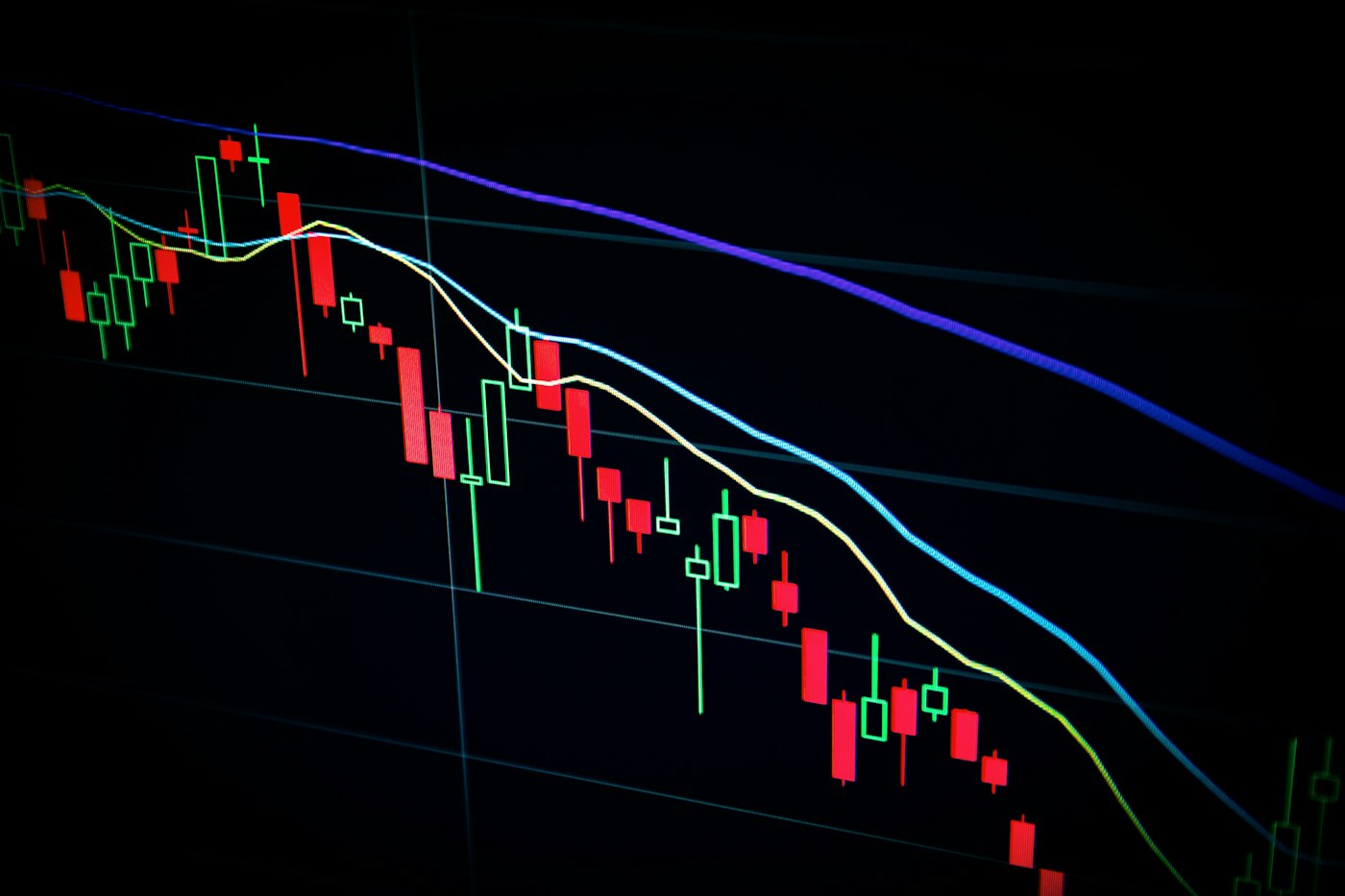
Anatomy of a Candlestick
Each candlestick represents price action during a specific time period (1 minute, 1 hour, 1 day, etc.)
Parts of a Candlestick:
- Body: Rectangle showing open and close prices
- Wicks (Shadows): Lines above/below body showing high and low
- Color: Green/white = price went up, Red/black = price went down
Reading a Green (Bullish) Candle
- Bottom of body: Opening price
- Top of body: Closing price
- Lower wick: Lowest price during period
- Upper wick: Highest price during period
- Meaning: Buyers won - price closed higher than it opened
Reading a Red (Bearish) Candle
- Top of body: Opening price
- Bottom of body: Closing price
- Lower wick: Lowest price during period
- Upper wick: Highest price during period
- Meaning: Sellers won - price closed lower than it opened
What Candlestick Shapes Tell You
Long Body
Meaning: Strong buying or selling pressure
Green long body: Bulls in control
Red long body: Bears in control
Short Body
Meaning: Indecision, little price movement
Signal: Market consolidating, waiting for direction
Long Upper Wick
Meaning: Price was rejected at higher levels
Signal: Sellers pushed price down from highs
Long Lower Wick
Meaning: Price was rejected at lower levels
Signal: Buyers pushed price up from lows
No Wicks (Marubozu)
Meaning: Extreme strength in one direction
Green: Very bullish - buyers dominated entire period
Red: Very bearish - sellers dominated entire period
Important Single Candlestick Patterns
Doji
Shape: Small body (open = close), long wicks
Meaning: Indecision - buyers and sellers equal
Signal: Potential trend reversal coming
Hammer
Shape: Small body at top, long lower wick, little/no upper wick
Meaning: Sellers pushed down but buyers pushed back strongly
Signal: Bullish reversal (after downtrend)
Shooting Star
Shape: Small body at bottom, long upper wick, little/no lower wick
Meaning: Buyers pushed up but sellers pushed back strongly
Signal: Bearish reversal (after uptrend)
Spinning Top
Shape: Small body in middle, long wicks both sides
Meaning: High volatility, no clear winner
Signal: Indecision, possible trend change
Choosing the Right Timeframe
Common Timeframes
- 1 minute: Each candle = 1 minute of price action
- 5 minutes: Each candle = 5 minutes
- 15 minutes: Each candle = 15 minutes
- 1 hour: Each candle = 1 hour
- 4 hours: Each candle = 4 hours
- 1 day: Each candle = 1 day
- 1 week: Each candle = 1 week
Timeframe by Trading Style
Scalping (Minutes to Hours)
Timeframes: 1m, 5m, 15m
Goal: Quick profits from small moves
Difficulty: Very hard, high stress
Day Trading (Hours to 1 Day)
Timeframes: 15m, 1h, 4h
Goal: Profit within same day
Difficulty: Hard, requires attention
Swing Trading (Days to Weeks)
Timeframes: 4h, 1D, 1W
Goal: Catch larger price swings
Difficulty: Moderate, more forgiving
Position Trading (Weeks to Months)
Timeframes: 1D, 1W, 1M
Goal: Long-term trends
Difficulty: Easier, less stress
Multiple Timeframe Analysis
Strategy: Check multiple timeframes before trading
- Higher timeframe (1D or 1W): Identify overall trend
- Medium timeframe (4H or 1H): Find entry opportunities
- Lower timeframe (15m or 5m): Fine-tune exact entry
Rule: Trade in direction of higher timeframe trend
Identifying Trends
The Three Types of Trends
1. Uptrend (Bull Market)
Definition: Series of higher highs and higher lows
Meaning: Buyers in control, price going up
Strategy: Look to buy, avoid shorting
Phrase: "The trend is your friend"
2. Downtrend (Bear Market)
Definition: Series of lower highs and lower lows
Meaning: Sellers in control, price going down
Strategy: Look to sell/short, avoid buying
3. Sideways (Range/Consolidation)
Definition: Price moving horizontally between support and resistance
Meaning: Indecision, accumulation/distribution
Strategy: Buy at support, sell at resistance, or wait for breakout
Drawing Trendlines
Uptrend Line
- Connect two or more higher lows
- Line should slope upward
- Acts as support - price bounces off it
- Break below = trend may be ending
Downtrend Line
- Connect two or more lower highs
- Line should slope downward
- Acts as resistance - price gets rejected
- Break above = trend may be ending
Support and Resistance Levels
What is Support?
Definition: Price level where buying pressure is strong enough to prevent further decline
Visual: Price bounces up when it hits this level
Psychology: Buyers think "this is a good price to buy"
Strategy: Look to buy near support
What is Resistance?
Definition: Price level where selling pressure is strong enough to prevent further rise
Visual: Price gets pushed down when it hits this level
Psychology: Sellers think "this is a good price to sell"
Strategy: Look to sell near resistance
How to Find Support and Resistance
- Historical levels: Where price reversed multiple times before
- Round numbers: $10,000, $50,000, $100,000 (psychological levels)
- Previous highs/lows: All-time high, recent swing high/low
- Moving averages: 50-day, 200-day MA often act as support/resistance
Support/Resistance Role Reversal
Key Concept: When broken, support becomes resistance and vice versa
Example:
- Bitcoin at $30,000 support - price bounces multiple times
- Price breaks below $30,000 (support broken)
- Now $30,000 becomes resistance - price gets rejected when trying to go back up
Strength of Support/Resistance
Stronger when:
- Price tested it many times
- High volume at that level
- Round psychological number
- Longer timeframe (daily > hourly)
Key Technical Indicators
1. Moving Averages (MA)
What it is: Average price over X periods, smooths out noise
Types:
- SMA (Simple): Equal weight to all prices
- EMA (Exponential): More weight to recent prices (more responsive)
Common periods:
- 50-day MA: Short-term trend
- 200-day MA: Long-term trend
How to use:
- Price above MA = uptrend
- Price below MA = downtrend
- MA acts as support/resistance
- Golden Cross: 50 MA crosses above 200 MA = bullish
- Death Cross: 50 MA crosses below 200 MA = bearish
2. RSI (Relative Strength Index)
What it is: Momentum indicator showing if asset is overbought or oversold
Range: 0 to 100
How to read:
- Above 70: Overbought - price may drop soon
- Below 30: Oversold - price may rise soon
- 50: Neutral
Strategy:
- Look to sell when RSI > 70
- Look to buy when RSI < 30
- Divergence: Price makes new high but RSI doesn't = bearish signal
3. MACD (Moving Average Convergence Divergence)
What it is: Trend-following momentum indicator
Components:
- MACD line: Fast EMA - Slow EMA
- Signal line: EMA of MACD line
- Histogram: Difference between MACD and signal
How to use:
- MACD crosses above signal: Bullish (buy signal)
- MACD crosses below signal: Bearish (sell signal)
- Histogram growing: Momentum increasing
- Histogram shrinking: Momentum decreasing
4. Bollinger Bands
What it is: Volatility indicator showing price range
Components:
- Middle band: 20-day SMA
- Upper band: 2 standard deviations above
- Lower band: 2 standard deviations below
How to use:
- Price touching upper band = overbought
- Price touching lower band = oversold
- Bands squeeze (narrow) = low volatility, breakout coming
- Bands expand (wide) = high volatility
5. Volume
What it is: Number of coins/tokens traded in a period
Why it matters: Confirms strength of price moves
How to use:
- Price up + high volume: Strong bullish move (reliable)
- Price up + low volume: Weak move (may reverse)
- Price down + high volume: Strong bearish move
- Price down + low volume: Weak move
Common Chart Patterns
Reversal Patterns (Trend Change)
1. Head and Shoulders (Bearish)
Shape: Three peaks - middle one highest (head), two lower (shoulders)
Signal: Uptrend ending, downtrend starting
Entry: When price breaks below neckline
2. Inverse Head and Shoulders (Bullish)
Shape: Upside-down H&S - three valleys
Signal: Downtrend ending, uptrend starting
Entry: When price breaks above neckline
3. Double Top (Bearish)
Shape: Two peaks at similar level, valley between
Signal: Price tried to break resistance twice, failed, now reversing down
Entry: When price breaks below valley (support)
4. Double Bottom (Bullish)
Shape: Two valleys at similar level, peak between
Signal: Price tried to break support twice, failed, now reversing up
Entry: When price breaks above peak (resistance)
Continuation Patterns (Trend Continues)
1. Bull Flag (Bullish)
Shape: Sharp rise (flagpole), then small downward channel (flag)
Signal: Brief pause in uptrend, then continues up
Entry: When price breaks above flag
2. Bear Flag (Bearish)
Shape: Sharp drop (flagpole), then small upward channel (flag)
Signal: Brief pause in downtrend, then continues down
Entry: When price breaks below flag
3. Triangle (Can be Bullish or Bearish)
Types:
- Ascending: Flat top, rising bottom = usually bullish
- Descending: Flat bottom, falling top = usually bearish
- Symmetrical: Both sides converging = breakout either direction
Signal: Consolidation before big move
Entry: When price breaks out of triangle
4. Cup and Handle (Bullish)
Shape: U-shaped cup, small downward handle
Signal: Strong bullish continuation
Entry: When price breaks above handle
Volume Analysis
Why Volume Matters
Volume = Conviction: High volume means many traders agree on direction
Low volume = Weak move: Few traders involved, move may reverse
Volume Principles
- Breakout + high volume: Real breakout (trade it)
- Breakout + low volume: Fake breakout (avoid it)
- Uptrend + increasing volume: Healthy trend
- Uptrend + decreasing volume: Weak trend, may reverse
- Price up + volume down: Divergence, bearish signal
Volume Indicators
- Volume bars: Simple bars showing volume each period
- OBV (On-Balance Volume): Cumulative volume indicator
- Volume Profile: Shows volume at each price level
Common Chart Reading Mistakes
1. Using Too Many Indicators
Problem: Chart becomes cluttered, conflicting signals
Solution: Stick to 2-3 indicators max
2. Ignoring Higher Timeframes
Problem: Trading against major trend on 5m chart
Solution: Always check daily/weekly trend first
3. Seeing Patterns Everywhere
Problem: Confirmation bias - seeing what you want to see
Solution: Be objective, wait for clear patterns
4. Trading Every Signal
Problem: Overtrading, death by a thousand cuts
Solution: Be selective, only trade best setups
5. No Stop-Loss
Problem: One bad trade wipes out account
Solution: Always use stop-loss, risk max 1-2% per trade
6. Forgetting Volume
Problem: Trading breakouts with no volume confirmation
Solution: Always check volume before entering trade
7. Emotional Trading
Problem: FOMO buying, panic selling
Solution: Stick to plan, trade the chart not emotions
Conclusion
Reading cryptocurrency charts is a skill that takes time to develop. Start with the basics - understand candlesticks, identify trends, and learn support/resistance. Then gradually add indicators and patterns to your toolkit.
Key takeaways:
- Candlesticks: Show open, high, low, close - learn to read them
- Trends: Trade with the trend, not against it
- Support/Resistance: Key levels where price reverses
- Indicators: Use 2-3 max (MA, RSI, Volume recommended)
- Patterns: Help predict future price movement
- Volume: Confirms strength of moves
- Timeframes: Check multiple, trade in direction of higher timeframe
Beginner action plan:
- Open TradingView, look at Bitcoin daily chart
- Practice identifying uptrends and downtrends
- Draw support and resistance lines
- Add 50-day and 200-day moving averages
- Add RSI indicator
- Watch charts for 30 days before trading real money
- Paper trade (fake money) for 3 months
- Only then trade small amounts with real money
Remember: Technical analysis isn't fortune-telling. It's about probabilities, not certainties. Even the best setups fail sometimes. Always use proper risk management, never risk more than you can afford to lose, and keep learning.
Chart reading is just one tool. Combine it with fundamental analysis, market sentiment, and common sense for best results. The goal isn't to predict every move perfectly - it's to be right more often than wrong and manage risk when you're wrong.
Published: December 15, 2024
Disclaimer: This article was created to provide general information only. Please verify that the information is accurate and remember that technology changes very quickly - what is good today may not be valid tomorrow. This is not financial advice. Trading cryptocurrency is risky and you can lose money.
Start Your Crypto Journey with Koinonos
Buy cryptocurrency with zero fees and start building your portfolio. Perfect for beginners and experienced traders alike.
Get Started with Koinonos