Table of Contents
What is Blockchain?
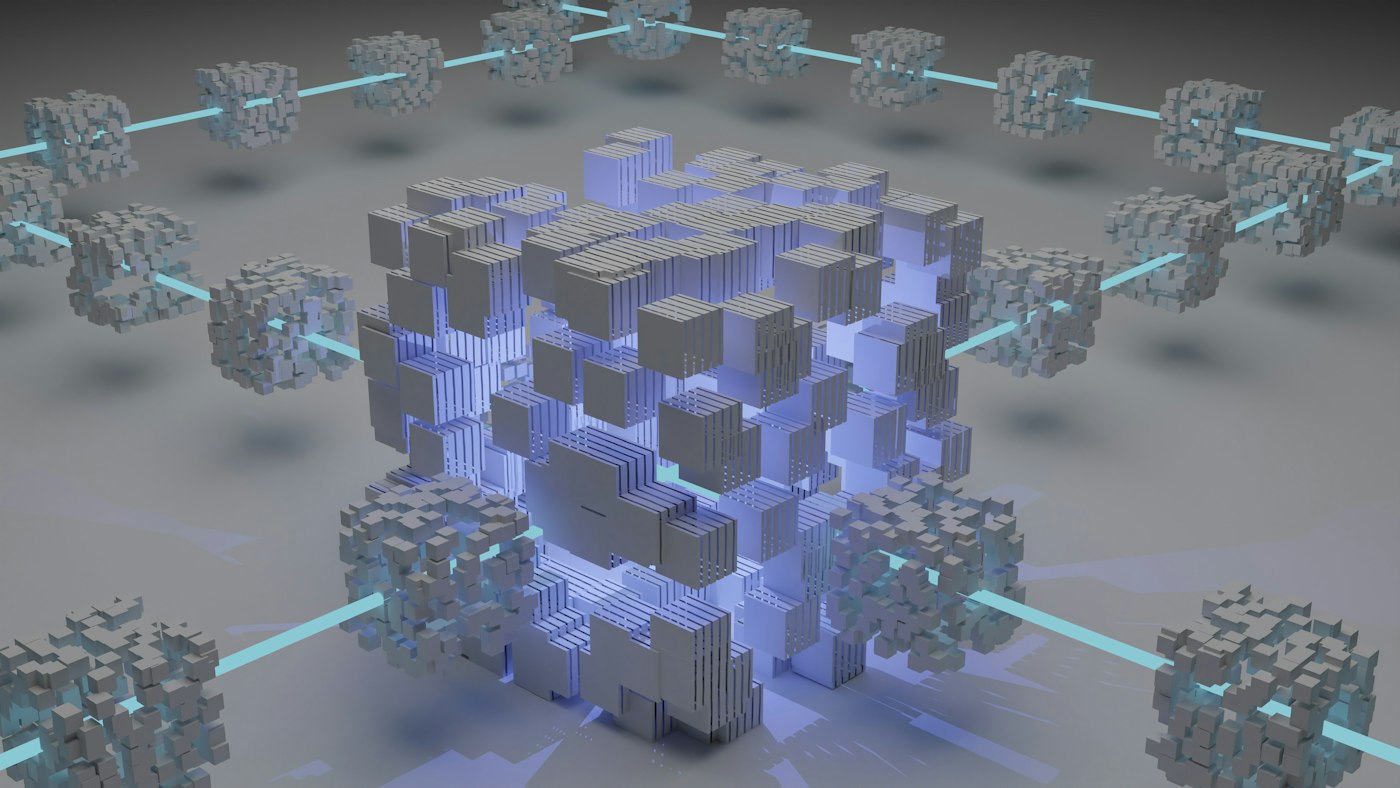
A blockchain is a distributed digital ledger that records transactions across many computers in a way that makes it nearly impossible to alter, hack, or cheat the system.
Breaking Down the Name
- Block: A container of data (transactions, timestamps, etc.)
- Chain: Blocks linked together in chronological order
The Core Innovation
Before blockchain, digital information could be copied infinitely (the "double-spending problem"). Blockchain solved this by creating digital scarcity - proving that a digital asset exists in only one place at one time, without needing a central authority.
History
- 1991: Concept first described by Stuart Haber and W. Scott Stornetta
- 2008: Satoshi Nakamoto publishes Bitcoin whitepaper
- 2009: Bitcoin blockchain goes live (first practical implementation)
- 2015: Ethereum launches, introducing smart contracts
- 2020s: Enterprise adoption, government exploration, Web3 emergence
How Blockchain Works
Step-by-Step Process
Transaction Initiated
Someone requests a transaction (e.g., sending Bitcoin to another person)
Transaction Broadcast
The transaction is broadcast to all nodes (computers) in the network
Validation
Network nodes validate the transaction using algorithms (checking if sender has funds, signature is valid, etc.)
Block Creation
Validated transactions are combined with other transactions into a new block
Consensus
Network reaches consensus on the validity of the new block (via Proof of Work, Proof of Stake, etc.)
Block Added to Chain
The new block is cryptographically linked to the previous block, creating a chain
Distribution
The updated blockchain is distributed across the network - everyone has the same copy
Transaction Complete
The transaction is complete and permanently recorded
What's Inside a Block?
Each block contains:
- Data: Transaction information (sender, receiver, amount, timestamp)
- Hash: Unique identifier for the block (like a fingerprint)
- Previous Hash: Hash of the previous block (creates the chain)
- Nonce: Number used in mining (for Proof of Work)
- Timestamp: When the block was created
Cryptographic Hashing
Hashing is the magic that makes blockchain secure:
- Takes any input and produces a fixed-length output (hash)
- Same input always produces same hash
- Tiny change in input = completely different hash
- Impossible to reverse (can't get input from hash)
- Example: SHA-256 hash of "Hello" = 185f8db32271fe25f561a6fc938b2e264306ec304eda518007d1764826381969
Why It's Tamper-Proof
If someone tries to change a transaction in an old block:
- The block's hash changes
- The next block's "previous hash" no longer matches
- The entire chain breaks
- All other nodes reject the tampered chain
- The attacker would need to recalculate all subsequent blocks faster than the rest of the network (nearly impossible)
Key Features of Blockchain
1. Decentralization
Traditional: Central authority controls the database (bank, government, company)
Blockchain: No single point of control - distributed across thousands of nodes
Benefit: No single point of failure, censorship-resistant
2. Transparency
What it means: All transactions are visible to everyone on the network
Privacy note: Addresses are pseudonymous (not directly linked to real identity)
Benefit: Auditable, builds trust
3. Immutability
What it means: Once data is recorded, it cannot be altered or deleted
How: Cryptographic hashing and consensus make changes computationally infeasible
Benefit: Permanent record, prevents fraud
4. Security
How it's secured:
- Cryptographic encryption
- Distributed consensus
- No single point of attack
- Majority of network must agree on changes
5. Trustless
What it means: You don't need to trust other parties - the system enforces rules
Example: Smart contracts execute automatically when conditions are met
6. Permissionless (Public Blockchains)
What it means: Anyone can join, read, write, and participate
Benefit: Open access, no gatekeepers
Types of Blockchains
1. Public Blockchains
Access: Open to everyone
Examples: Bitcoin, Ethereum, Solana
Characteristics:
- Fully decentralized
- Anyone can read, write, and validate
- Transparent - all transactions visible
- Secured by economic incentives (mining/staking rewards)
Use Cases: Cryptocurrency, DeFi, NFTs, public records
2. Private Blockchains
Access: Restricted to authorized participants
Examples: Hyperledger Fabric, R3 Corda
Characteristics:
- Controlled by one organization
- Permissioned - need invitation to join
- Faster (fewer nodes to reach consensus)
- More centralized
Use Cases: Enterprise solutions, supply chain, internal auditing
3. Consortium Blockchains
Access: Semi-private, controlled by a group
Examples: Energy Web Chain, IBM Food Trust
Characteristics:
- Controlled by multiple organizations
- Pre-selected nodes validate transactions
- Balance between decentralization and efficiency
Use Cases: Banking consortiums, industry collaborations
4. Hybrid Blockchains
Access: Combination of public and private
Characteristics:
- Some data public, some private
- Flexible access control
Use Cases: Healthcare records, government services
Consensus Mechanisms
How does a decentralized network agree on what's true?
Proof of Work (PoW)
Used by: Bitcoin, Ethereum (pre-Merge), Litecoin
How it works:
- Miners compete to solve complex mathematical puzzles
- First to solve gets to add the block and earn rewards
- Requires massive computational power
Pros: Very secure, battle-tested
Cons: Energy-intensive, slow, expensive
Proof of Stake (PoS)
Used by: Ethereum (post-Merge), Cardano, Polkadot
How it works:
- Validators "stake" (lock up) cryptocurrency
- Network randomly selects validators to create blocks
- Validators earn rewards, lose stake if they cheat
Pros: 99.95% less energy, faster, scalable
Cons: "Rich get richer" concern, newer/less tested
Other Consensus Mechanisms
- Delegated Proof of Stake (DPoS): Token holders vote for validators (EOS, Tron)
- Proof of Authority (PoA): Pre-approved validators (VeChain)
- Proof of History (PoH): Cryptographic timestamps (Solana)
- Byzantine Fault Tolerance (BFT): Voting-based consensus (Cosmos)
Blockchain vs Traditional Databases
Traditional Database
- Control: Centralized (one admin)
- Access: Restricted, need permission
- Modification: Can edit/delete data
- Transparency: Opaque to outsiders
- Trust: Must trust the administrator
- Speed: Very fast
- Cost: Lower operational cost
- Failure: Single point of failure
Blockchain
- Control: Decentralized (distributed)
- Access: Open (public) or permissioned
- Modification: Immutable, append-only
- Transparency: Fully transparent
- Trust: Trustless - code enforces rules
- Speed: Slower (consensus needed)
- Cost: Higher (redundancy, consensus)
- Failure: No single point of failure
When to Use Blockchain vs Database
Use Blockchain When:
- Multiple parties need to share data without trusting each other
- Immutability and audit trails are critical
- Decentralization is important
- Transparency is required
Use Traditional Database When:
- Single organization controls the data
- Speed and efficiency are priorities
- Data needs to be updated/deleted regularly
- Privacy is more important than transparency
Real-World Use Cases
1. Cryptocurrency & Payments
Application: Digital money without banks
Examples: Bitcoin, Ethereum, stablecoins
Benefit: Borderless, fast, low-cost transfers
2. Supply Chain Management
Application: Track products from origin to consumer
Examples: Walmart (food safety), De Beers (diamond tracking)
Benefit: Transparency, reduce fraud, verify authenticity
3. Healthcare
Application: Secure medical records, drug traceability
Examples: MedRec, Guardtime
Benefit: Patient privacy, interoperability, prevent counterfeit drugs
4. Voting Systems
Application: Secure, transparent elections
Examples: Estonia e-voting, Voatz
Benefit: Prevent fraud, increase accessibility, instant results
5. Real Estate
Application: Property titles, smart contracts for sales
Examples: Propy, RealT
Benefit: Reduce paperwork, faster transactions, fractional ownership
6. Identity Management
Application: Self-sovereign digital identity
Examples: Civic, uPort
Benefit: Control your own data, reduce identity theft
7. Intellectual Property
Application: Copyright, patents, royalty distribution
Examples: NFTs for art, Audius for music
Benefit: Prove ownership, automatic royalties
8. Banking & Finance
Application: Cross-border payments, trade finance, securities
Examples: JPMorgan's JPM Coin, Ripple
Benefit: Faster settlement, reduced costs, 24/7 operation
9. Government Services
Application: Land registries, public records, benefits distribution
Examples: Dubai Blockchain Strategy, Georgia land registry
Benefit: Reduce corruption, increase efficiency
10. Energy & Utilities
Application: Peer-to-peer energy trading, grid management
Examples: Power Ledger, Energy Web Chain
Benefit: Decentralized energy markets, renewable energy credits
Challenges & Limitations
1. Scalability
Problem: Public blockchains are slow compared to traditional systems
- Bitcoin: ~7 transactions per second (TPS)
- Ethereum: ~15-30 TPS
- Visa: ~24,000 TPS
Solutions: Layer 2 scaling (Lightning Network, Rollups), sharding, alternative consensus
2. Energy Consumption
Problem: Proof of Work blockchains use massive amounts of electricity
Bitcoin's energy use: ~150 TWh/year (comparable to Argentina)
Solutions: Proof of Stake (99.95% less energy), renewable energy mining
3. Regulation & Legal Uncertainty
Problem: Governments still figuring out how to regulate blockchain
Issues: Tax treatment, securities laws, cross-border jurisdiction
4. Interoperability
Problem: Different blockchains can't easily communicate
Solutions: Cross-chain bridges, interoperability protocols (Polkadot, Cosmos)
5. User Experience
Problem: Complex for average users (private keys, gas fees, etc.)
Solutions: Better wallets, account abstraction, fiat on-ramps
6. Immutability Paradox
Problem: What if wrong data is recorded? Can't be changed
Issue: GDPR "right to be forgotten" conflicts with immutability
7. 51% Attack Risk
Problem: If one entity controls >50% of network, they can manipulate it
Reality: Very expensive for major blockchains, but possible for smaller ones
8. Storage Limitations
Problem: Blockchain grows forever, nodes need more storage
Bitcoin blockchain: ~500 GB and growing
Solutions: Pruning, off-chain storage, state channels
The Future of Blockchain
Emerging Trends
1. Enterprise Adoption
Major corporations integrating blockchain:
- IBM, Microsoft, Oracle offering blockchain services
- Banks testing CBDCs (Central Bank Digital Currencies)
- Supply chain giants (Walmart, Maersk) using blockchain
2. Web3
The next evolution of the internet:
- Decentralized apps (dApps) replacing centralized services
- Users own their data and digital assets
- Token-based economies
3. Interoperability
Blockchains working together seamlessly:
- Cross-chain bridges
- Universal standards
- Multi-chain ecosystems
4. Scalability Solutions
Making blockchain fast enough for mainstream use:
- Layer 2 rollups (Optimism, Arbitrum)
- Sharding (Ethereum 2.0)
- New consensus mechanisms
5. Regulation & Standardization
Governments creating clear frameworks:
- Crypto regulations worldwide
- CBDC development
- Industry standards emerging
6. Sustainability
Addressing environmental concerns:
- Shift to Proof of Stake
- Carbon-neutral blockchains
- Renewable energy mining
Potential Impact
If blockchain reaches its potential, we could see:
- Finance: Banking the unbanked, instant global payments
- Governance: Transparent, tamper-proof voting and records
- Business: Automated supply chains, reduced fraud
- Internet: User-owned web, data sovereignty
- Society: New economic models, decentralized organizations
Conclusion
Blockchain is a distributed ledger technology that enables secure, transparent, and tamper-proof record-keeping without central authority. Key characteristics include:
- Decentralization: No single point of control
- Immutability: Records can't be altered
- Transparency: All transactions visible
- Security: Cryptographic protection
- Trustless: Code enforces rules, not people
While blockchain faces challenges like scalability, energy consumption, and regulatory uncertainty, it's already transforming industries from finance to supply chain to healthcare.
The technology is still evolving. Public blockchains like Bitcoin and Ethereum continue to mature, while enterprises experiment with private and consortium blockchains. Layer 2 solutions are addressing scalability, and the shift to Proof of Stake is solving energy concerns.
Whether blockchain becomes the foundation of Web3 or finds specific use cases where decentralization adds value, it has already proven that distributed consensus and digital scarcity are possible - and that's a significant technological breakthrough.
Published: December 15, 2024
Disclaimer: This article was created to provide general information only. Please verify that the information is accurate and remember that technology changes very quickly - what is good today may not be valid tomorrow.
Experience Blockchain with Koinonos
Buy Bitcoin, Ethereum, and other cryptocurrencies with zero fees. Your crypto goes directly to your wallet on the blockchain.
Get Started with Koinonos